
Gambling harm and debt advice: Challenging stigma and ending the silence
Table of contents
A landmark year for sport and its wider impact
2026 is going to be a huge year for sport and hosts a world sporting event calendar that will appeal to fans of each genre – the Six Nations, the Winter Olympics, Darts, Cricket, Formula 1, Boxing, Rugby Union, The Masters, not to mention the World Cup starting in June.
These events will evoke the usual excitement, culminating in packed venues, bars and restaurants, quickly followed by intense feelings of euphoria or disappointment, which are ultimately dependent on the results during and after the event. These events can also create feelings of community, of belonging, but also anxiety and isolation when compulsive behaviours, such as gambling-related harms, are in the mix.
Rising Gambling-Related Harm: What the data shows
We’ve seen the results of gambling related financial harms during conversations with our clients and the increase in identification and disclosure of this type of compulsive behaviour has been startling. Alongside our improved processes for encouraging client disclosures, factors such as COVID-19, lockdown measures, the cost-of-living crisis, and the growing accessibility of online gambling platforms have contributed to an increase in gambling-related harm.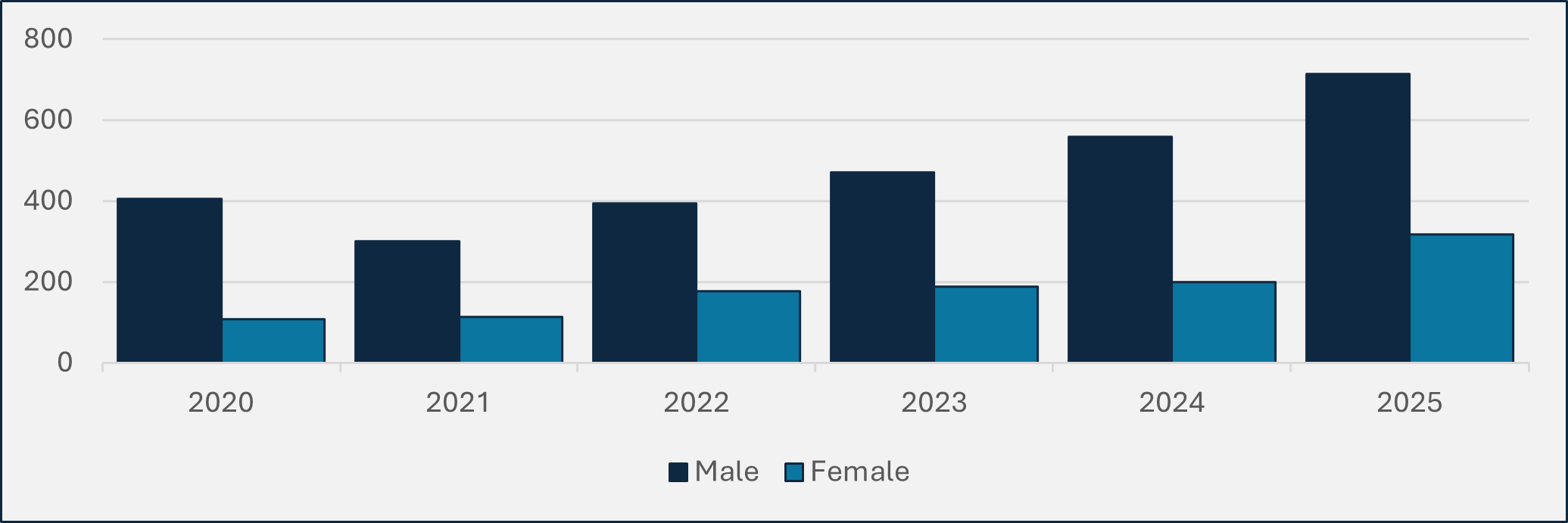
As this graph shows, male gambling related financial harms has increased by 76% in 2025 compared to 2020 – that’s almost twice as many.
And it isn’t just the male demographic that gambling related financial harms are impacting – women now represent 28% of all disclosures, and an increase of 196% in 2025 compared to 2020 – almost 3 times as many.
Demographic Trends and Financial Resilience
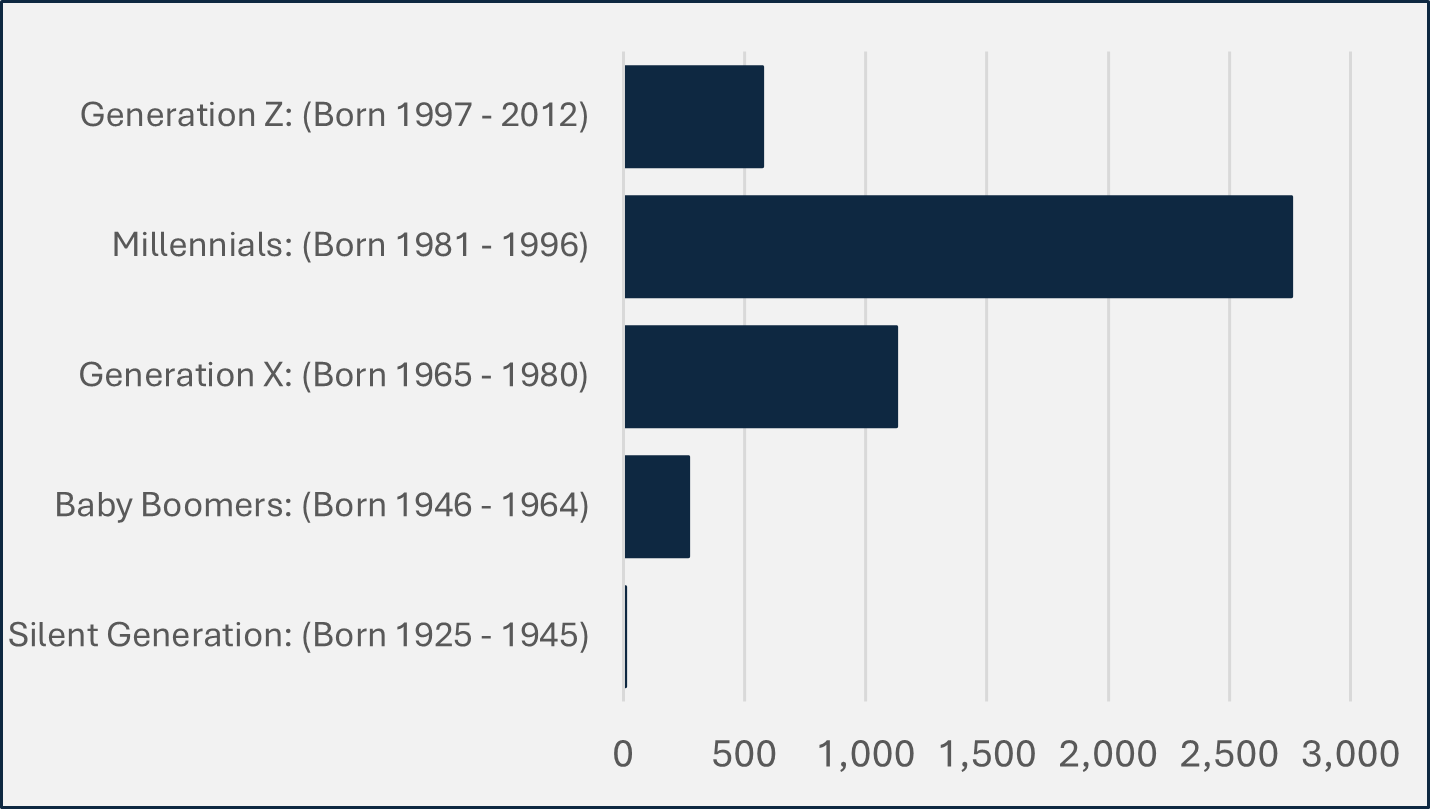
Generational demographics are a key factor too in identifying the prevalence of gambling related financial harm and the impact this is having on financial resilience.
Millennials account for 58% of all data, followed by generation X at 24%, and generation Z at 12 %.
Barriers to seeking help
Given the barriers that people face to access support when impacted by compulsive behaviours, it’s prevalent to understand this data and to provide ways to remove these barriers and ensure that there is access to debt advice needed and in the most suitable format.
Initial barriers to reaching out for help, and recognising that support is needed, are a non-exhaustive list, but can include:
- The influence of social media and its prevalence
- Targeted algorithms influencing gambling compulsive activity
- Loss of social interaction and awareness
- Not being ready to stop, despite others raising concern
- Chasing the losses and expecting the big win
- The short-term high is outweighed by the long-term problem
- Normalising the behaviour, and not accepting it’s an issue or knowing when it is time to stop
The role of co-existing vulnerabilities
Another issue of course is where additional wider support needs are underpinning and adding to the compulsive behaviours.
Our data shows how other needs are also disclosed and identified alongside the gambling related financial harm:
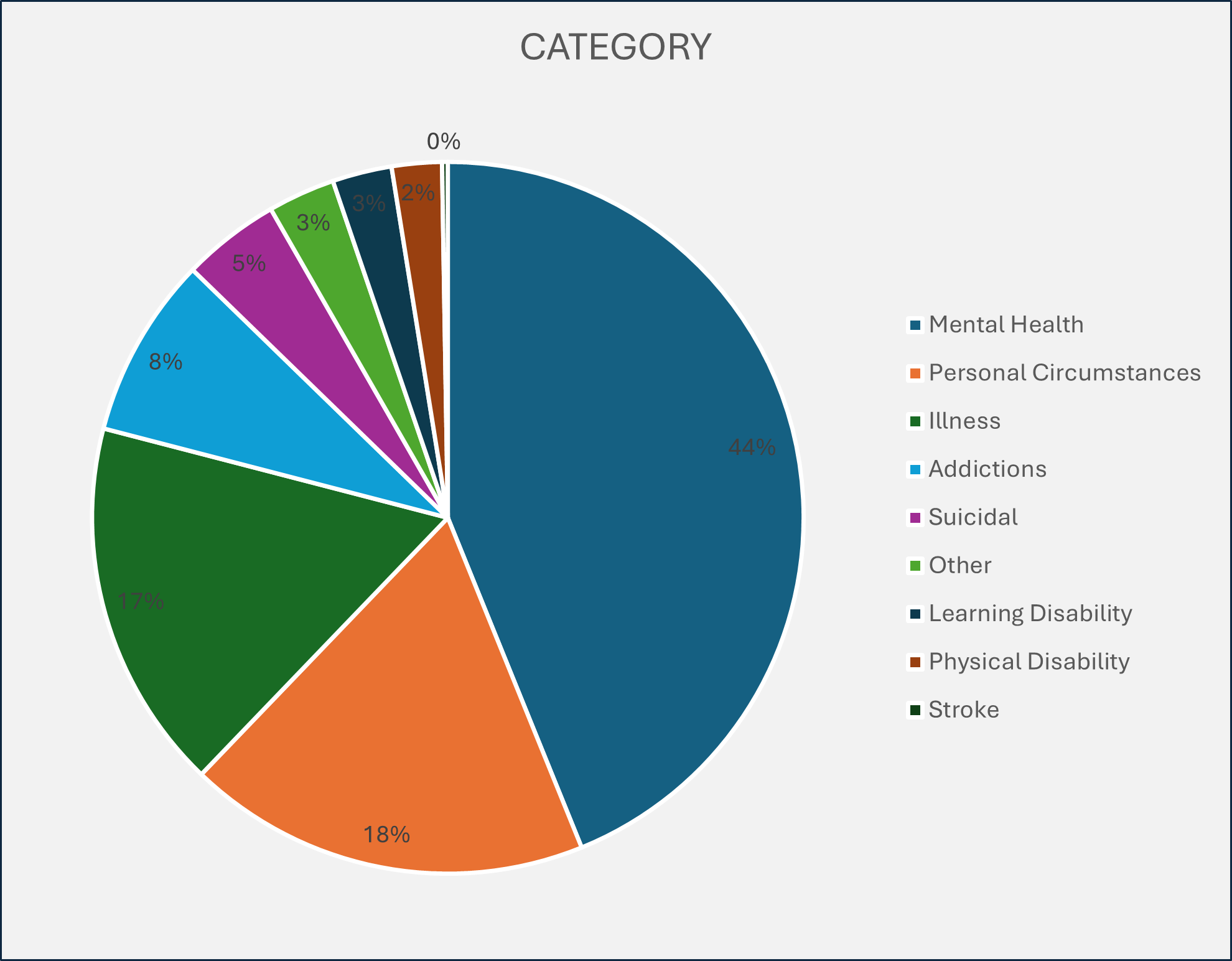
This graph shows how mental health is affecting our clients that have gambling related financial harm, with 44% of all disclosures also expressing the impact on mental health and almost 5% are struggling with suicidal thoughts and ideation. Personal circumstances are also prevalent within this cohort of clients, and includes relationship breakdown, job loss and increasingly domestic and economic abuse – creating that toxic trio and perfect storm – all of which could be the root cause of the gambling related financial harms- not forgetting of course the impact on financial resilience that will be affecting all clients.
Understanding the cycle of harm
In these situations, it can be difficult to determine which one came first, the gambling related financial harms or the wider support needs, as they are so intrinsically linked, and each can be the root cause in each owns right. What can be established though, is that they will all create barriers to reaching out for help, and impact recognising when a compulsive behaviour is an issue and when to reach out for help to break the cycle.
People find it hard to know when a compulsive behaviour is an issue for many reasons – it’s another non-exhaustive list, but can include thoughts and feelings such as denial, responsibility, fear, embarrassment, guilt, a short-term high is outweighed by the long-term problem and believing it to be normalised behaviour.
There can be other contributing factors too such as a lack of experience, losing a sense of reality, being overconfident that the big win will happen, peer pressure from social groups, and behaviour breeding behaviour to the point where it is normalised, a lack of experience, and of course stigma – the key here is to realise it’s an issue and when it is time to stop.
The 2026 Sporting Calendar: A trigger point for risk
With the key sporting events of 2026 already upon us, and the world cup being a one of those events, awareness of support and help available for compulsive behaviour and related harms is key – as is putting measures in place to future proof where there is a risk of the impact of such events.
Removing barriers and encouraging disclosure
A key starting point is removing the barriers for anyone at the point that they recognise they need help for the compulsive behaviour and linked gambling harms, to ensure the support is there when its needed.
These barriers can be very different for everyone, but on a general level these can be perceived that someone can’t be helped or that there is no help available, to other primary drivers of stigma, embarrassment, judgement and the fear of the what’s next.
Social media and algorithms also have a part to play in putting barriers in place to accessing help through the loss of social interaction, normalising behaviour, through to chasing losses and not wanting to stop.
The role of organisations in providing support
But how can organisations support with removing these barriers, particularly when a short-term high is outweighed by the long-term problem, and how can someone be encouraged to be open about their compulsive behaviour when they are not actively disclosing their situation.
At PayPlan when clients approach us for free debt advice, there is that root cause that needs to be understood to ensure this is incorporated into advice and a resulting debt solution.
Our advisers are trained to recognise the indicators of gambling related financial harm, and to then probe accordingly to understand a client’s circumstances. This probing needs to be done empathetically, with no judgement and with the aim of building trust and rapport through the use of supportive and correct language , so that the client the adviser is working with is given the space , the freedom and the time to talk – the key is to start the conversation, gently question and not to give up when there are evident concerns. Through active listening skills the adviser is then able to establish the level of harm and what further support is required, in addition to the debt advice.
Digital journeys and the role of AI
These initiatives also need to be incorporated into the digital journey, as by their very nature, clients may choose to engage over such platforms, which will in itself help to remove the stigma and embarrassment of resulting financial harms through the very nature of the communication method and not having to verbalise the compulsive behaviour.
With the continued incorporation of AI into client journeys and being impartial ,which ultimately will help people to engage when they need to , the risk is that the indicators of compulsive behaviour will be missed , so these indicators also need to be considered in the client journey development ,to ensure that when a client experiencing gambling related financial harm is following this journey , they are identified and have access to the same level of support .
Support strategies and practical interventions
These levels of support need to be varied to meet the needs of individual needs, but at PayPlan these include, but are not limited to:
- Working with key partners to provide a holistic approach for support. For example, PayPlan have worked with GamCare for several years on a reciprocal basis – so Gamcare can refer their service users to PayPlan directly through a bespoke link to the secure referral hub which accesses support from the Special Advice team. PayPlan advisers can also refer directly into the national gambling helpline via hotkey or a referral form, so it mirrors the communication preference choice of the client.
- Educating clients with the practical tools available which are discussed as part of the debt advice journey including the gambling blocks available through a client’s bank, blocking software, self-exclusion, money management and budgeting advise.
- Through the guidance of the special advice team, working with an adviser to provide one-on-one support, with no time perimeters to build the required trust and rapport.
- All advisers trained to utilise the Gambling related Financial Harm toolkit that PayPlan supported through the GamCare gambling related financial toolkit, including the referral pathway, which is an enhancement and continuation to the process already in place – Guide for professionals working in debt and money sector.
A collective responsibility
The sporting calendar of 2026 will be a challenging year for many, bringing moments of excitement and unity, but also increasing the risk of gambling-related harm, especially for those who may already be vulnerable. As the scale and accessibility of gambling continues to grow alongside these events, so too must our response.
This report highlights that gambling related financial harm doesn’t just exist in isolation, with many factors compounding the difficulties in recognising the problem and seeking help. The data clearly shows that more people are coming forward, but it also reinforces how many may still be struggling in silence.
Breaking that silence is critical. Reducing stigma, increasing awareness, and creating safe, non-judgemental environments for disclosure are essential steps in ensuring that people feel able to seek support. Whether through human interaction or digital channels, the approach must remain consistent: empathetic, accessible, and tailored to individual needs.
Organisations have a vital role to play in this. By embedding training, strengthening partnerships, and designing services that proactively identify and respond to indicators of harm, we can remove barriers and provide earlier, more effective interventions. Collaboration across sectors will be key to delivering a truly holistic support system that addresses not just the financial impact, but the underlying causes of harm.
Ultimately, the goal is not only to support those already affected, but to prevent harm from escalating in the first place. With the right awareness, tools, and collective commitment, we can ensure that individuals are better protected and supported.
The opportunity now is to act – to use insight, data, and lived experience to shape services that meet people where they are, when they need it most. By doing so, we can challenge stigma, end the silence, and make meaningful progress in tackling gambling-related harm.
Help and support is available
If anything you have read has raised concerns, or if you feel you may need support, the organisations below are available to provide confidential, non-judgemental help and guidance.