
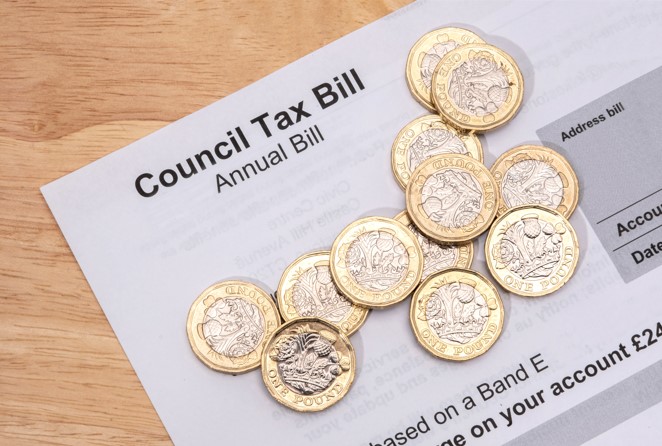
Council Tax Debt
No one likes having to pay Council Tax, especially as it seems to be forever increasing year on year, but this really needs to be a priority bill and should be paid regularly to avoid any serious problems.
Ways to pay your Council Tax bill
Pay the whole amount in one lump sum by cheque at your local council offices. Pay your bill by direct debit over ten months, or by Giro bank transfer. Pay your bill monthly or weekly over the counter at your local council offices in cash with a payment card. If you are a council tenant, pay weekly at your local housing office.
What happens if I don’t pay my council tax?
If you miss your council tax payment, your local council will send you a reminder giving you just 7 days to pay. If you fail to pay within these 7 days, you will receive a final notice giving you 7 days to pay the whole year’s Council tax.
If you don’t pay within the final notice period, the council may take legal action to obtain the tax you owe.
If you still don’t pay the council can get your employer to pay your unpaid council tax direct from your wages. The council can also take money you owe from the following benefits
- Income support
- Jobseekers allowance
- Pension Credit
- Universal credit
- Employment and Support Allowance
Reducing the cost of the council tax
There are 4 ways in which the bill can sometimes be reduced. A disability reduction where your home has been adapted for use by a physically or mentally disabled person of any age (including children). If you think you might qualify – contact your council for further help and advice. Disability reductions can be backdated. By obtaining a discount.
A discount of 25% will apply if there is only one adult over the age of 18. This is known as single person discount. There are also other types of discounts known as status discounts. There are a large number of these so to find out more contact either the council or your local free advice centre.
The transitional reduction scheme. This only affects a small number of people who live in areas affected by local government re-organisation.
Council Tax Reduction (previously known as Council Tax Benefit)
If you or your family has a low income you may be entitled to council tax reduction which will pay all or part of the bill.
It is important to claim this as soon as possible as backdating is generally not allowed.
To read more about Council Tax Reduction or how to apply please visit the government website www.gov.uk/council-tax-reduction
Council Tax Arrears
Council tax is a priority bill. If you have council tax arrears the local authority will usually want them repaid within the financial year, which runs from April to March. If you can’t pay the arrears by the end of the financial year you need to work out what you can realistically afford by drawing up a budget sheet.
Offer the amount you can afford towards your arrears on top of your normal payments, and ask for a special payment arrangement: explain that the amount you are offering will prevent any further arrears and court costs. If your local authority will not negotiate with you ask your local councillor to intervene on your behalf and continue making your reduced payments to the authority.
When making payments towards your arrears it is important that you make clear which year you are paying. If you do not do this, the payments can be put towards your arrears first which results in your current bill going further into arrears. If your local authority is doing this you should consider making a complaint and asking your councillor to help. If this is unsatisfactory try The Local Government Ombudsman.
Council Tax arrears after death
When someone dies and in arrears with their council tax, the debt is recoverable from any assets or money left behind from the estate.
No one else should have to pay for the debt unless they are liable under the terms of the council tax agreement. You can be liable to repay this debt if the debt is in joint name or if you have signed a guarantor.
Hardship
If you do not have any means to pay the arrears you should contact your local authority and discuss this with them to see if an arrangement can be made that is suitable to both parties. It is extremely important that you keep in contact with your local authority regarding this debt.
If you are suffering severe hardship it is also a good idea to contact your local councillor and/or your local Citizens Advice Bureau for support in dealing with the local authority.
Liability Order
Once you are in arrears with Council Tax your local authority can apply to the magistrates’ court for a liability order. The magistrate will issue a summons for you to appear before them on a specified date. You do not have to attend but if the arrears are due to an inability to pay it is a good idea to go to the hearing and explain your circumstances to the magistrate.
Although the liability order will still be granted, if at a later date you are summonsed to a committal hearing, the fact you have already explained your circumstances at the earlier hearing will help persuade the magistrate that you have a genuine case. The application for the liability order will add about £40.00 to your bill.
Once the authority has a liability order they can use a wide range of enforcement methods to recover the arrears. However, it is never too late to negotiate an arrangement to pay and by doing so you may avoid enforcement. If you have received reminder letters because of late payments contacting the local authority quickly can sometimes prevent the issue of a liability order against you.
Attachment of Earnings
This is a popular method of enforcement. Following the granting of a liability order the local authority can order your employer to pay an amount of your wage directly to them towards your arrears. For each deduction made the employer can deduct £1.00 from your wages.
The amount of the deduction is based on a pre-arranged formula and can be as high as 17% of your normal take-home (net) pay. Be aware that once a liability order is in place and the local authority decides to go for an attachment of earnings, then negotiations regarding the monthly amount will be difficult.
If you already have an attachment of earnings order against you and are finding the amount you have left to live on is not enough, get advice from a PayPlan adviser.
Attachment of Benefit
If you are in receipt of income support or means tested Job Seekers Allowance the local authority could have the arrears taken directly from your benefit at a standard rate.
If Bailiffs are involved
This is the most common form of enforcement. The local authority can send bailiffs to your property with a view to taking and selling goods to clear the debt. The bailiff has to first gain peaceful access into your home before they can seize goods and possessions.
Seizing goods means that the bailiff will make a list of the things you own that can be taken away in the future and sell if you don’t come to a satisfactory arrangement to pay. You DO NOT have to let the bailiff in unless they have already been in your home before.
Bailiffs are often difficult to negotiate with and will demand high levels of payment if they are not to remove goods. Bailiffs operate under instruction from the local authority who can call them off.
If you are having difficulty negotiating with the bailiffs contact the local authority to come to an arrangement to pay. If the authority are not being helpful you can contact your local councillor or local free advice agency.
Other Council Tax enforcement options:
For non-payment of council tax and council tax arrears there are other options available to the authorities such as: Charging Orders on your home or Bankruptcy proceedings if the debt is above £5,000.
Council Tax and Prison
You can be sent to prison for up to 3 months if the court decides you don’t have a good reason to not pay your Council Tax and you refuse to do so.
Most people ask if they can go to jail for not paying council tax. There have been cases in the UK where people have been jailed for not paying their council tax however, this is extremely rare.
If you can’t afford to make payments to your arrears, then the local authority can ask for your committal to prison. In order to be sent to prison the magistrate must be convinced that you have either ‘wilfully refused’ to pay the tax or you have been ‘culpably neglectful’ which means you have had the means to pay but have simply neglected to pay .
You will receive a Summons to appear before the magistrates to explain why you should not be committed to prison. Regular payments, even small ones, are a valid defence against imprisonment and the magistrates have the power to write off some or all of the debt. If you do not appear a Warrant for your arrest will be issued.
Get debt help online or call us on 0800 316 1833 for a confidential conversation.
Let’s make life more affordable
You’re just two steps away from taking back control of your finances and freeing up more money for you and your family.

Getting advice has no impact on your credit score.
Excellent, professional, friendly and empathetic service. PayPlan have given us our lives back!

Sandra Daly

Excellent, professional, friendly and empathetic service. PayPlan have given us our lives back!
Sandra Daly

 Secure & confidential